Why is my basement flooding after heavy rain in Albin
Albin's clay-heavy soil, flat lots and aging drain tile send rain straight into basements. Here's what actually causes it and how to stop it.
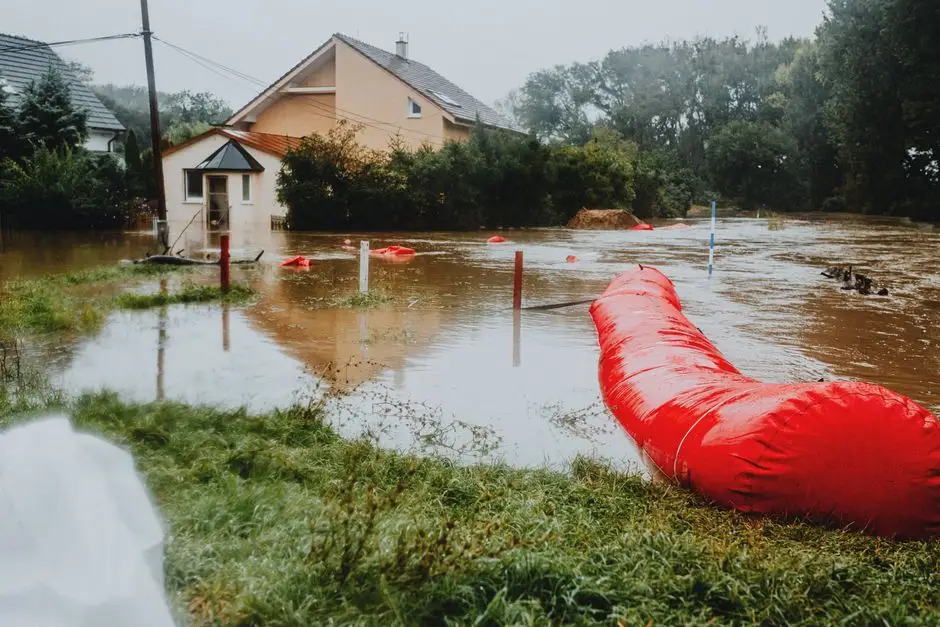
Your basement floods after heavy rain in Albin because the ground around your foundation cannot absorb water as fast as a hard storm delivers it. Once the soil is saturated, the extra water follows the path of least resistance - down the outside of your foundation wall, through a crack, a failed window well, a clogged footing drain, or back up through the floor drain if the town line is surging. That is the whole mechanism in one paragraph. What changes from house to house is which of those paths is doing the work, and that is what we track down before we pull a single wet box off your floor.
The rest of this post walks through the specific causes we find in Albin, how to tell groundwater from a sewer backup, what a 2026 cleanup costs, and when it is worth calling us instead of renting another shop vac.
The short answer: where the water is actually coming from
Water Damage Restoration Albin WY is the work of finding the entry point, stopping it, and drying the structure before mold sets in - usually within 24 to 48 hours of the storm. There are only five realistic entry points in an Albin home: the wall-floor joint (the cove), foundation wall cracks, window wells and stairwells, floor drains and sewer laterals, and the sump pit itself. Every flooded basement we have walked into traces back to one of those five.
Here is the part most homeowners miss. The water you see pooled in the middle of the floor almost never entered there. It came in at the perimeter, spread under the slab or across the floor, and pooled at the low spot. That is why mopping the middle of the room does nothing - you are treating the symptom, not the source.
If you have already had water in twice this year, the pattern matters more than the puddle. We map where it entered, how deep it got, and how long it sat before you noticed. Those three facts decide whether you need a $400 fix or a $9,000 drainage rebuild.
Albin's soil and grading push rain toward your foundation
Albin sits on the high plains of Laramie County, and the soil here is the first thing we look at. Much of it is clay-heavy with a shallow topsoil layer, which means it takes on water slowly and holds it. A half-inch of rain in twenty minutes does not soak in - it sheets across the surface looking for somewhere to go, and the nearest low point is usually your foundation.
Add the region's freeze-thaw cycle and you get the second problem. Water that seeps into a foundation wall crack in October freezes, expands, and widens that crack by spring. By the time the next big rain hits, a hairline crack has become a real opening. We see this most in homes built before 1990, where the original dampproofing has long since dried out and failed.
Grading is the other half. A lot that was graded correctly in 1985 has settled, and the soil has been pulled away from the foundation by years of runoff. The rule we use is simple: the ground should drop at least 6 inches over the first 10 feet away from the wall. If it slopes toward the house instead, every storm is feeding your basement.
- Downspouts discharging within 3 feet of the foundation - extend them 6 to 10 feet out.
- Negative grade along one wall - usually the driveway or patio side.
- Window wells without covers - they fill like buckets in a hard storm.
- Failed or missing gutter - one clogged section dumps hundreds of gallons at the corner.
We handle a lot of this work in the older blocks around Water Damage Restoration in Downtown Albin, where homes sit close together and runoff from one lot lands on the next. If your neighbour's grade drains toward your wall, that is worth a conversation before the next storm.
Why does my basement flood only after heavy rain and not light rain?
Because light rain never saturates the soil - the ground absorbs it, and your foundation never sees standing water. A hard storm is a different event. The soil column fills up, the water table rises temporarily, and hydrostatic pressure builds against the outside of your wall. That pressure is what pushes water through cracks and the cove joint, and it is why the flooding starts 30 to 90 minutes after the rain begins, not during it.
That delay is a useful diagnostic. If water appears while it is still raining hard, you are usually looking at a surface problem - a window well, a stairwell, a downspout dumping at the wall. If it shows up an hour after the rain stops, you are looking at groundwater pressure or a surging sewer line. Two different problems, two different fixes.
We also see a third pattern in homes above the valley floor: the sump pit fills, the pump runs, and the discharge line freezes or kinks at the exterior. The pump is working fine. The water just has nowhere to go, so it comes back in.
Sump pumps, drain tile and the failures we see most
A sump pump is only as good as the drain tile feeding it, and drain tile is the part nobody thinks about until it clogs. Footing drains installed 30 or 40 years ago collect silt, roots and iron ochre. Once the perforations are blocked, water never reaches the pit - it just sits against the wall until it finds a way in.
The pump itself fails in predictable ways. A float that sticks after sitting dry all summer. A check valve that has gone bad, letting water drain back and short-cycle the pump. A discharge line that runs into a spot where it freezes solid in January. And in a storm that knocks out power, a pump with no battery backup is simply a bucket.
What we recommend for an Albin home:
- Test the pump twice a year - pour five gallons into the pit and time how long it takes to clear.
- Add a battery backup or a water-powered backup if you have ever lost power during a storm.
- Run the discharge at least 10 feet from the foundation and keep it below the frost line or sloped to drain.
- Have the pit cleaned every two to three years - grit destroys impellers.
If the pit is filling faster than the pump can clear it, that is a capacity problem, not a pump problem, and no replacement pump will fix it. That is when we look at the tile and the exterior drainage together.
Sewer backup versus groundwater: how to tell them apart
Groundwater smells like dirt. Sewer backup smells like sewer, and it usually arrives through the floor drain or the lowest fixture in the house - a basement laundry sink, a shower, a toilet. If water came up through a drain rather than seeping in at a wall, treat it as contaminated. That changes the cleanup completely.
Category 3 water, which is what a sewer backup is, requires removal of porous materials, antimicrobial treatment, and in many cases replacement of drywall up to 24 inches above the high-water line. You cannot dry it out and call it done. We have seen homeowners paint over a sewage-flooded basement floor and wonder why the smell comes back every humid week.
Older Albin neighborhoods with combined storm and sanitary lines are the highest risk. When a heavy rain overwhelms the line, the water has to go somewhere, and the lowest connection in the system is your basement floor drain. A backwater valve installed on the lateral is the standard fix, and it is a job for a licensed plumber, not a weekend project.
For homes up on the higher ground toward Water Damage Restoration in Albin Heights, the picture is usually groundwater rather than sewer - different slope, different soil depth, different fix.
What to watch out for after a flood
The damage you can see is the cheap part. The damage you cannot see - wet insulation inside a finished wall, saturated subfloor, a soaked bottom plate - is what turns a $1,500 cleanup into a $12,000 rebuild. Here is what we tell every homeowner who calls us after a storm.
- Do not run a household fan and call it dry. A box fan moves air; it does not remove moisture from framing. Mold can start colonizing a wet wood stud in 24 to 48 hours.
- Do not pull up wet carpet and leave the pad. The pad holds water longer than the carpet and is the first thing to go.
- Do not assume the water is clean. If it came through a drain, a toilet, or over a concrete floor that has ever had a car on it, it is contaminated.
- Do not wait for the insurance adjuster before extracting water. Most policies require you to mitigate further damage. Waiting three days for an adjuster can cost you the claim.
- Do not ignore the smell two weeks later. That is mold, and it means the drying was incomplete.
We also see people stack wet boxes and furniture back against the wall before the framing is dry. Air needs to move along the base of the wall. Leave a 2-foot gap for at least a week after the equipment comes out.
When to call a professional
Call us when the water is more than an inch deep, when it came up through a drain, when it has been sitting more than 12 hours, or when the flooded area includes finished drywall, carpet or a furnace. Those four conditions are the ones that turn into mold and structural problems if they are handled with a wet vac and a dehumidifier from the hardware store.
We bring truck-mounted extraction, commercial air movers, and refrigerant or desiccant dehumidifiers sized to the cubic footage of the space. We take moisture readings in the framing, the subfloor and the concrete until everything is back to a dry standard, not just dry to the touch. And we document all of it with photos and daily readings, which is what your insurance adjuster needs to see.
For a basement that is still taking on water, the first step is stopping the source. That is where Basement Water Extraction Albin WY comes in - we extract, we set drying equipment, and we tell you honestly whether the entry point is a $300 fix or a drainage project. If the storm also backed up a floor drain or a laundry sink, we move into Flood Cleanup Albin WY protocols, which include antimicrobial treatment and removal of contaminated materials.
What basement water cleanup costs in Albin in 2026
Typical 2026 pricing in this area runs $1,200 to $3,500 for a standard basement extraction and dry-out of 500 to 1,000 square feet. That covers water removal, equipment placement, daily monitoring and a final moisture check.
Add $800 to $2,500 if the water was contaminated and we have to remove and dispose of drywall, carpet and pad. Add $500 to $1,500 for a finished basement with insulation in the walls, because the wall cavity takes longer to dry and needs injection drying.
The exterior fix is separate and usually cheaper than people expect. Regrading one wall runs $600 to $1,800. Extending downspouts and adding window well covers is a few hundred dollars. A backwater valve on the sewer lateral runs $1,200 to $2,800 installed, depending on access. A full interior drain tile and sump system, if the footing drain is beyond saving, runs $6,000 to $14,000 - but that is a permanent fix, and it is the one that stops the annual call.
Insurance usually covers sudden storm-driven water damage and sewer backup if you have the endorsement. It almost never covers gradual seepage or a failed sump pump you knew was failing. That distinction is worth checking with your agent before the next storm, not after.
Frequently Asked Questions
How long does it take to dry out a flooded basement?
Most Albin basements dry in 3 to 5 days with commercial equipment. Concrete floors and block walls take the longest. If the basement is finished with drywall and carpet, plan on 5 to 7 days, and we check moisture daily until the framing reads dry.
Will my insurance cover basement flooding from heavy rain?
Usually yes for sudden storm-driven water entry, and usually yes for sewer backup if you bought that endorsement. Gradual seepage and long-term leaks are typically excluded. Check your policy before the storm, because mitigation requirements apply the moment water enters.
Can I just shop-vac the water and run a dehumidifier?
Only for a small spill under an inch deep on an unfinished floor. A shop vac cannot pull water out of carpet pad, drywall or the wall-floor joint, and a household dehumidifier is too small for a full basement. Mold can start within 24 to 48 hours.
Why does my basement only flood in spring and after big storms?
Because that is when the soil is saturated and the water table is high. Spring snowmelt plus a heavy rain event is the worst combination in Albin. The rest of the year, the ground absorbs the water and your foundation never sees pressure.
How do I stop my basement from flooding again?
Fix the water outside first: positive grade, downspouts 6 to 10 feet from the wall, window well covers, and a working sump with a backup. If the footing drain is clogged or collapsed, interior drain tile and a new sump system is the permanent fix.
Get help with Water Damage Restoration in Albin
If your basement is wet right now, the clock is running. We extract the water, dry the structure, and tell you exactly what caused it so it does not happen again next spring.
Call us at +1 (866) 476-5815 and we will get a crew moving toward your address.